Hearing Testing in Rapid City, SD and Newcastle, WY
Do you know what you’re missing?
The reality is, with hearing loss, you don’t know what you can’t hear. Once your brain stops recognizing certain sounds, they simply fade from your perception. But that doesn’t mean those sounds aren’t still there.
For example, ever wonder why you don’t hear the robin chirping outside your window in spring? The birds haven’t disappeared—you just can’t hear them anymore, along with a variety of other sounds in your daily environment. That’s why regular hearing testing is so important. By checking your hearing, you’ll discover what you’ve been missing, and you can make an informed decision about whether you want to stay tuned in or tuned out.
At Mountain Plains Audiology, we provide comprehensive hearing tests using the latest technology to evaluate your hearing health. Our skilled audiologists will:
- Identify Any Hearing Loss: We’ll assess the extent and type of hearing loss, whether it’s mild or more severe.
- Tailor a Solution for You: If hearing loss is detected, we offer personalized treatment options to help you regain the sounds you’ve been missing.
- Provide Peace of Mind: Even if you pass your hearing test, regular monitoring is key to maintaining good hearing health over time.
Don’t wait until those sounds are gone for good. Visit us at our Rapid City, SD, or Newcastle, WY, locations to schedule a hearing test and find out exactly what you’ve been missing. Call our clinic at 605-307-3597 or 605-307-3670 to schedule an appointment.

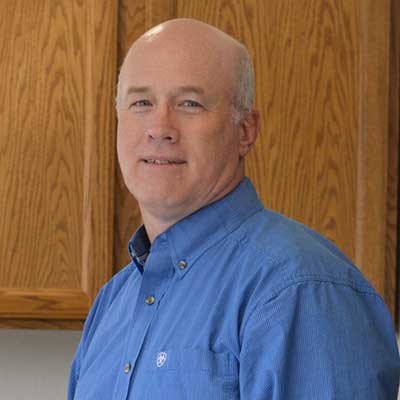
Norman N. Sorensen
Your hearing test at Mountain Plains Audiology is performed by Norman N. Sorensen, M.A., a licensed audiologist and owner who has been serving the Black Hills community since 1999. Norman earned his Master of Arts in Audiology from Ohio University and brings clinical experience from hospital and ENT settings across the country. He combines technical expertise with a patient-centered approach — every evaluation includes a clear, unhurried explanation of your results and what they mean for your daily life.
Why get a hearing test?
The World Health Organization projects that by the year 2050, one in every ten people will have debilitating hearing loss that requires intervention. This is even worse as you get older: One in every 3 people over the age of 65 have hearing loss.
Yet many people are unaware that they have hearing loss. That’s because hearing loss often progresses quite slowly, making any deterioration easy to miss until the damage is irreversible. Hearing tests help track your hearing over time and catch hearing loss early.
After all, hearing loss is a serious issue. If left untreated, it can lead to serious health issues, including cognitive decline. Why risk that when hearing tests are simple and painless?
Hearing tests:
- Catch hearing loss early
- Determine which hearing loss solutions are best for you
- Help you customize and program your hearing aids
How do I know if my hearing is bad, and when should I get tested?
Have you tried this super simple hearing test?
Ask your spouse, your kids, and your friends if they think you should get your hearing tested. Chances are, you don’t even need to ask. They’ve probably been telling you for years to see a specialist and get your hearing tested.
Yes, most of us are more stubborn than a mule and have put off acknowledging our hearing loss for years and years. But, whether you’re experiencing symptoms or not, hearing tests are proactive steps you can take to protect your hearing and detect problems early.
The general guidelines for such hearing tests are:
- If you are under 50 and have no signs of hearing loss: You should generally have your hearing tested every 3 years.
- 50 – 65: You should have your hearing tests at least once every two years. One in every four adults who report excellent hearing actually has some hearing loss, so it’s a good idea to get tested even if you aren’t noticing symptoms.
- 65 or older: At this age, more than 30 percent of people have hearing loss. You should get your hearing checked annually.
Experts also recommend that you undergo at least one hearing test after reaching the age of 20 in order to establish a hearing baseline.
The frequency of these hearing tests can and should change if you begin noticing that you’re having hearing problems.
7 telltale signs you need a hearing test
Consider getting a hearing test if you:
- Begin to withdraw from social settings. For example, if you avoid going out with friends or co-workers.
- Have significant fatigue or memory problems, even if you’re getting enough sleep.
- Notice that voices sound muffled or distant when talking to other people.
- Have trouble understanding conversations because it feels as though letters or sounds keep dropping out–especially consonants.
- Need to consistently turn up the volume on your radio, mobile phone, or television.
- Ask others to speak up or repeat themselves frequently.
- Can’t understand speech in a crowd or in noisy situations.
If you suspect you are experiencing the symptoms of hearing loss, it’s important to undergo a hearing test as quickly as possible. The sooner you undergo your hearing test, the faster you will be able to hear better.
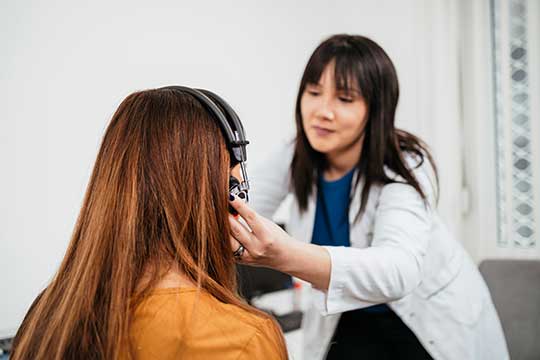
How can I test my hearing?
Every day you wake up is a test, and every day your family or friends talk to you is a test too. And it’d be easy to think everything is fine or almost perfect based on what you are hearing. Of course, the big problem is that there is a good chance you’ve already forgotten what you are missing. That happens to the best of us.
Which is why a professional hearing test is so important. You’ll discover what frequencies and types of sounds have gone missing and options for making them part of your life again, including hearing when your spouse or friend asks you to help with the dishes.
It’s easy to get started. Schedule a hearing test with us in Rapid City and Newcastle to see if hearing aids will improve your ability to hear.
Our hearing test will check your ability to hear different frequencies. Most people will lose the ability to hear very low or high frequency sounds before there is any noticeable deterioration of the ability to detect mid-frequency noises.
All of this information is then displayed on an easy-to-read graph, called an audiogram. Effectively addressing your hearing loss depends on the ability to amplify the wavelengths you have difficulty hearing, making an audiogram an indispensable first step.
Types of hearing tests in Rapid City, SD and Newcastle, WY
There are many ways to test your hearing, including:
Pure-tone audiometry
During this test, your hearing specialist will instruct you to listen to tones at different frequencies and volumes.
Speech and noise-in-words tests
These tests eschew the quiet room approach in order to determine how well your hearing functions in noisy situations. The idea behind this approach is to mimic how your hearing behaves in life, especially in noisy situations.
Tympanometry
By gently pushing air into your ear, this test measures how well your eardrum moves and is an important hearing test for your middle ear. The results will show us if your eardrum is too stiff, has fluid behind it, or has a hole in it.
Otoacoustic emissions (OAE) testing
When you hear sounds, sound waves vibrate in your inner ear creating “otoacoustic emissions” that echo back to your middle ear. An OAE test measures these emissions to see how well your cochlea is working. This type of test can also indicate whether your ear is blocked.
Hearing Tests in Rapid City: What Does It Cost, and Is It Covered?
One of the most common questions we get before a first appointment is: Will my insurance cover this? Here’s what you need to know before you call.
Most major insurance plans — including Medicare, Medicaid, and many private plans available to South Dakota and Wyoming residents — cover diagnostic hearing evaluations when performed by a licensed audiologist. Coverage varies by plan, so we recommend bringing your insurance card and letting us verify your benefits before your appointment. We accept most major insurance carriers and will give you a clear answer upfront.
Original Medicare (Parts A and B) covers diagnostic hearing tests when ordered by a physician for medical necessity — but it does not cover routine hearing screenings or hearing aids themselves. Many Medicare Advantage plans do include hearing benefits. If you’re on a Medicare Advantage plan, ask us to check your specific coverage when you call.
Hearing aids are a separate cost from the evaluation itself. We offer hearing solutions across a range of price points and work with financing options to make treatment accessible. We’ll never recommend a device based on budget alone — we’ll match a solution to your actual hearing loss and lifestyle first, then work through the financial piece together.
No referral is needed to schedule a hearing evaluation at Mountain Plains Audiology. You can call or text us directly at 605-307-3597 (Rapid City) or 605-307-3670 (Newcastle) to book.
- Your insurance card and a photo ID
- A list of current medications (some medications — including certain antibiotics, chemotherapy drugs, and common pain relievers — can affect hearing)
- A family member or trusted friend if possible
Questions about coverage before you schedule? Just call — we’re happy to check your benefits on the spot so there are no surprises.
What to Expect at Your Mountain Plains Audiology Appointment
A hearing test at our Rapid City office takes about an hour and is completely painless. Here’s how it goes:
1. Welcome & Health History When you arrive, our front desk team will get you checked in and may ask you to complete a brief intake form covering your health history, any medications you take, and the hearing concerns that brought you in. This takes about 10 minutes and gives our audiologist important context before the test begins.
2. Ear Examination Before the hearing tests begin, your audiologist will look into your ear canals with an otoscope — a handheld light instrument. This quick, painless check helps rule out simple causes of hearing difficulty like earwax buildup, fluid, or eardrum changes before we get to the booth.
3. Comprehensive Hearing Evaluation You’ll be seated in our sound-treated testing booth with headphones on. We’ll run you through a series of tests — pure-tone audiometry, speech recognition, tympanometry, and OAE testing as needed — to map your hearing across all frequencies and environments, including noisy ones. All you need to do is respond when you hear a sound. There’s nothing to study or prepare for.
4. Your Audiogram & Results Review After testing, your audiologist will sit down with you and walk through your audiogram — a visual map of your hearing — in plain language. We’ll explain what you’re hearing well, what frequencies have shifted, and what that means for your daily life.
5. Lifestyle Discussion & Your Options We’ll ask about the environments where you spend most of your time — whether that’s working outdoors in the Black Hills, sitting in meetings, watching the grandkids, or attending church. Your lifestyle shapes which solutions make the most sense. If hearing aids are recommended, we’ll show you appropriate options across a range of styles and price points, and walk you through insurance and financing options so cost isn’t a barrier to the care you need.
Feel free to bring a spouse or family member — a familiar voice is useful during the speech tests, and having support during the results conversation makes a real difference.
Reviewed by audiologists at Mountain Plains Audiology
Still have questions? Ask our audiologists!
